




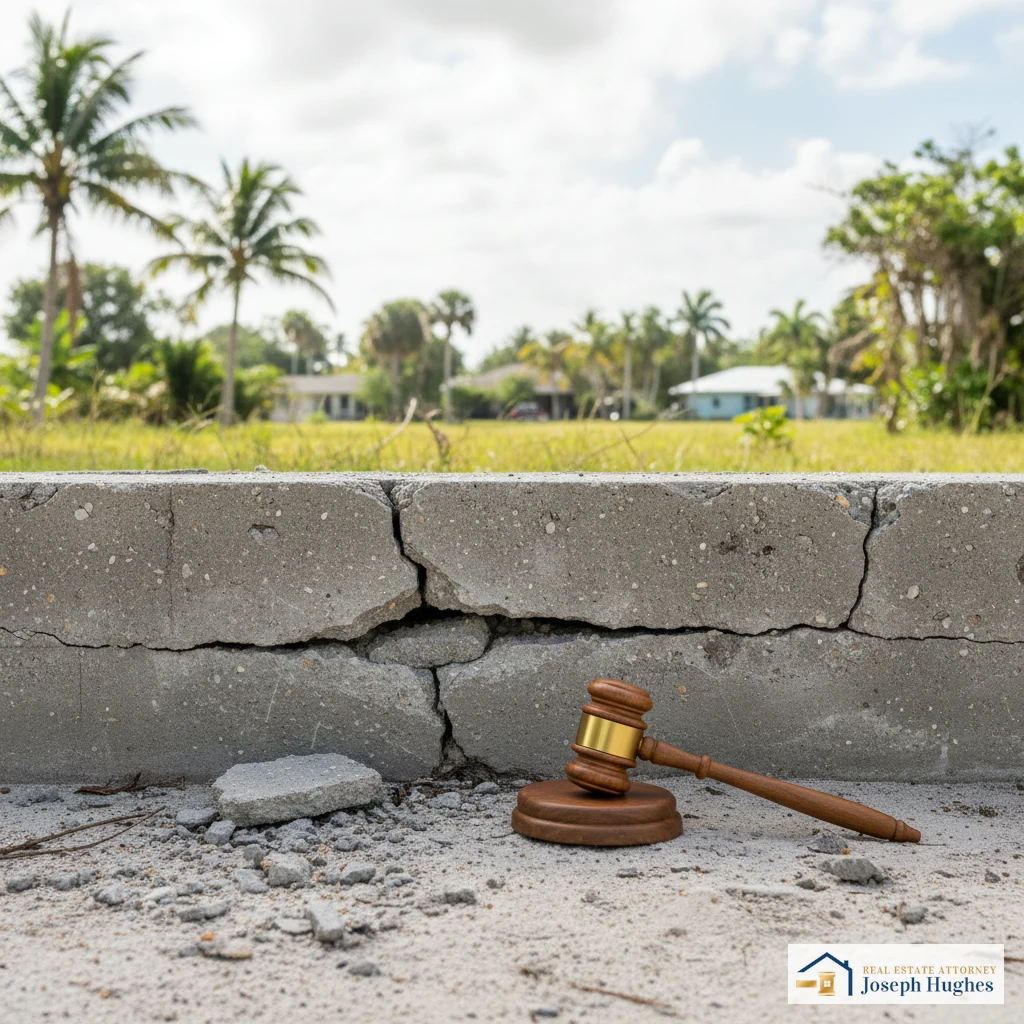
Construction defect claims in Florida give property owners a legal path to recover damages when a builder, contractor, or subcontractor delivers defective work. A Florida construction defect can range from a cracked foundation to a leaking roof, faulty electrical systems, or improper drainage. These defects can cause significant financial harm and reduce your property’s value. Understanding your rights under Florida law is the first step toward recovery. Hughes Real Estate Law represents property owners, developers, and investors throughout Broward County in construction defect disputes.
What Qualifies as a Construction Defect in Florida?
Florida law defines a construction defect broadly. Under Florida Statutes Chapter 558, a construction defect includes any deficiency in the design, construction, repair, alteration, or remodeling of a structure. Common examples include:
- Structural defects — cracked foundations, settling, load-bearing failures
- Water intrusion — roof leaks, improper flashing, stucco failures, mold
- Electrical and plumbing defects — code violations, improper installation
- HVAC failures — undersized systems, improper ductwork
- Drainage issues — improper grading causing flooding or erosion
- Exterior defects — window and door failures, siding problems
Not every imperfection qualifies as a legal construction defect. The defect must be the result of a failure to meet the applicable building codes, industry standards, or the express terms of the construction contract.
Florida’s Chapter 558 Pre-Suit Process
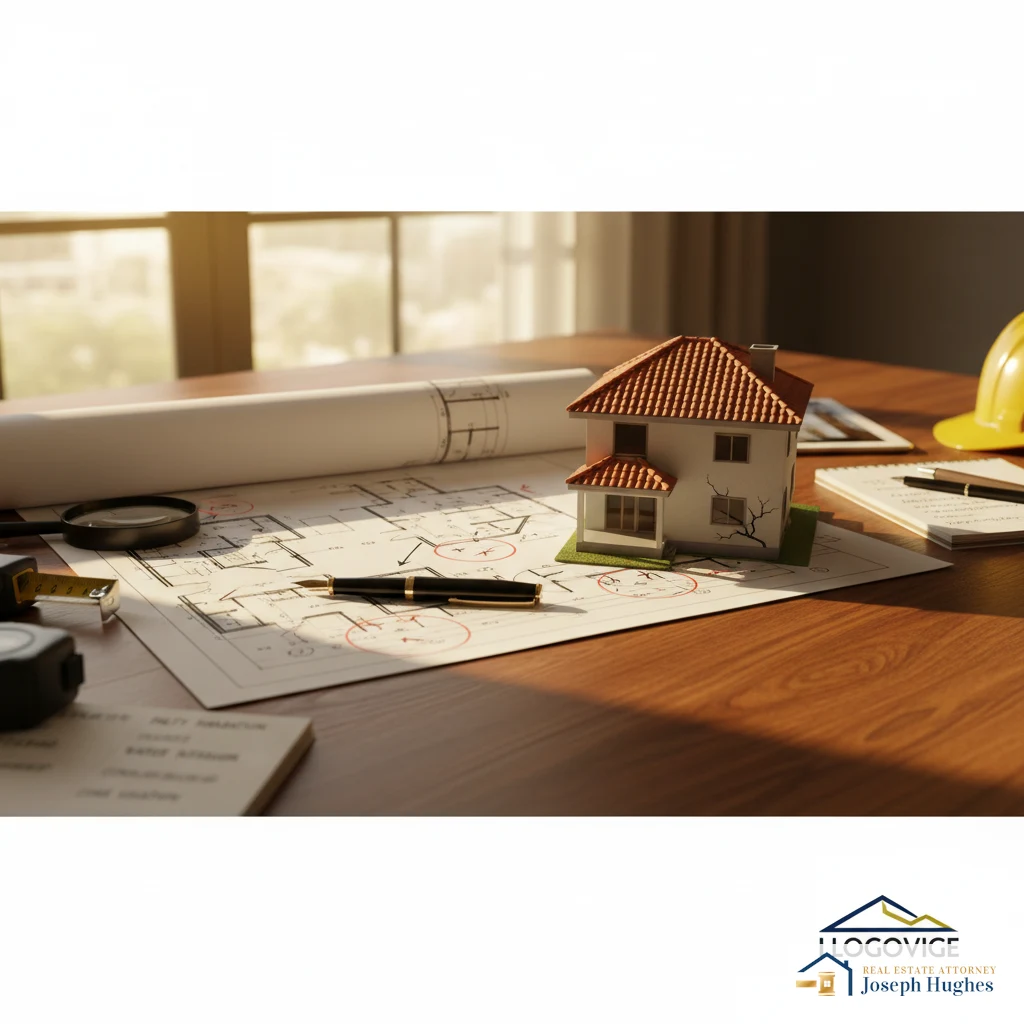
Before filing a lawsuit over a construction defect in Florida, property owners must follow the mandatory pre-suit notice process established by Florida Statutes Chapter 558. This process requires:
- Written notice — You must serve written notice of the defect on the contractor, subcontractor, or design professional responsible.
- Contractor’s right to inspect — The contractor has 30 days (or 50 days for single-family homes) to inspect the alleged defect.
- Settlement offer or denial — The contractor must respond with a written offer to repair, pay, or deny the claim within the statutory period.
- Proceed to litigation if unresolved — If the contractor denies the claim or the parties cannot agree on a remedy, you may file a lawsuit.
Skipping this process can result in your case being dismissed. Working with a real estate attorney Fort Lauderdale from the outset ensures the notice is properly drafted and served. The Broward County Permitting, Licensing and Consumer Protection office maintains records of permitted construction work that are often critical in defect cases. The Florida Bar also provides general guidance on construction-related legal rights for property owners.
Statute of Limitations for Construction Defect Claims in Florida
Timing is everything in a Florida construction defect claim. The key deadlines are:
| Limitation Type | Period | Trigger |
|---|---|---|
| Statute of Limitations | 4 years | From when you knew or should have known about the defect |
| Statute of Repose | 10 years | From the date of completion of construction — absolute deadline |
| Latent Defects | 4 years | From date of discovery |
Once the statute of repose expires, no construction defect claim can proceed regardless of when the defect was discovered. Do not wait — if you suspect a defect, contact a construction defect attorney immediately to preserve your rights. Florida’s Department of Business and Professional Regulation (DBPR) also licenses and disciplines contractors — a useful resource when verifying a contractor’s credentials.
Who Can Be Held Liable for Construction Defects in Florida?
Multiple parties can be responsible for a construction defect claim in Florida. Liability depends on who designed, built, inspected, or supervised the work. Potentially liable parties include:
- General contractors — overall responsibility for project execution
- Subcontractors — liable for their specific scope of work
- Architects and engineers — responsible for design defects
- Developers — can be liable even if they did not personally perform work
- Co-owners and HOAs — disputes over shared construction defects may require a HOA dispute attorney
- Material suppliers — if defective materials caused the problem
Florida law allows property owners to pursue multiple parties simultaneously. A real estate closing attorney Fort Lauderdale can review your purchase contract to identify any warranty protections that survived closing.
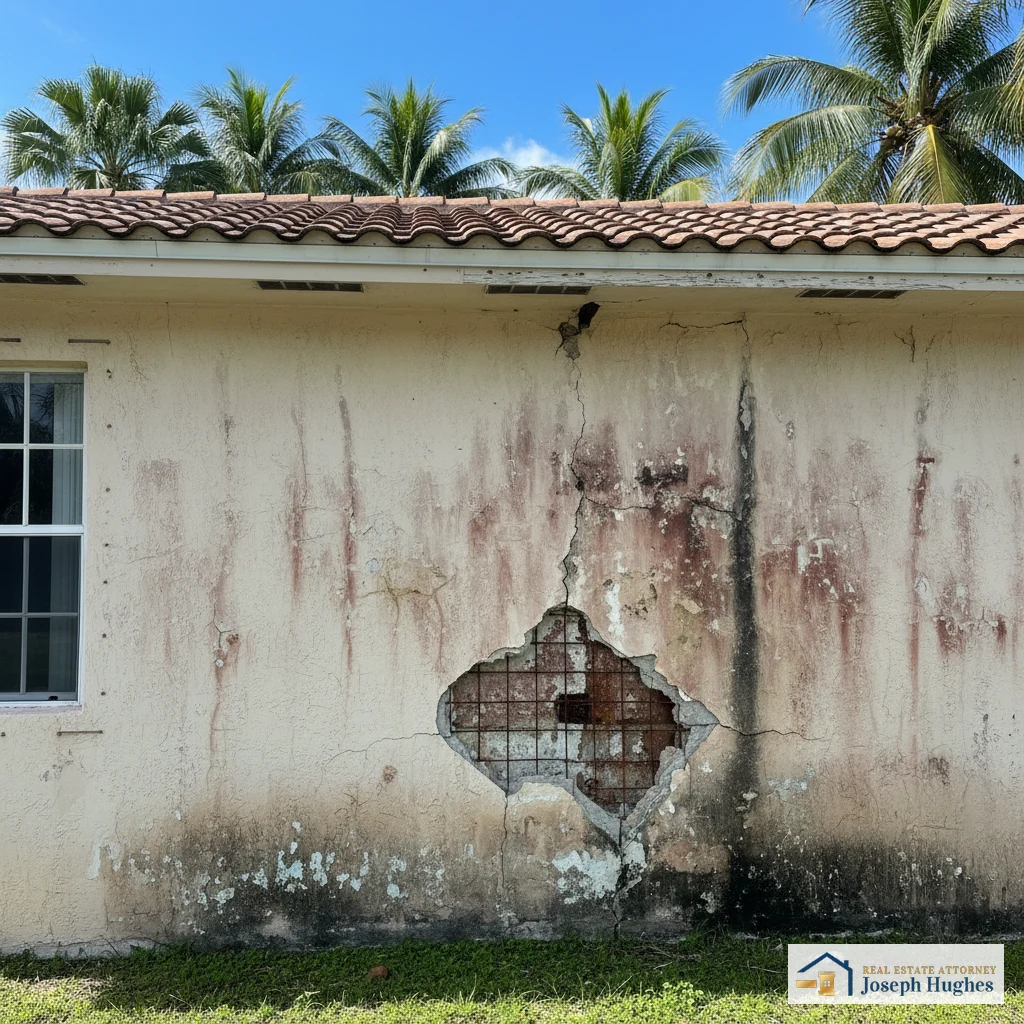
If the contractor’s insurance denies your claim, our Fort Lauderdale real estate litigation attorney team can take the matter to court and pursue full recovery on your behalf.
What Damages Can You Recover?
A successful Florida construction defect claim can recover:
- Cost of repairing or replacing the defective work
- Diminution in property value
- Costs of temporary housing or relocation during repairs
- Loss of use and enjoyment
- Consequential damages such as mold remediation
- Attorney’s fees in certain circumstances
Construction defect cases sometimes intersect with escrow disputes and real estate fraud claims when contractors misrepresent work quality or conceal known defects at closing.
Construction Defect Claims FAQ
| Question | Answer |
|---|---|
| How long do I have to file a construction defect claim in Florida? | 4 years from discovery, but no more than 10 years from project completion under the statute of repose. |
| Do I need an attorney to file a Chapter 558 notice? | Not legally required, but strongly recommended. Defective notices can waive your rights or cause delays. |
| Can I sue a contractor who is now out of business? | Possibly. Claims may be pursued against the contractor’s insurance, bonding company, or successor entity. |
| What if my HOA caused or ignored the defect? | HOA disputes involving construction defects may involve separate claims — consult an HOA dispute attorney. |
| Can new homeowners file construction defect claims? | Yes. Florida law allows subsequent purchasers to pursue claims for latent defects discovered after purchase. |
Protect Your Property With Hughes Real Estate Law
If your property has suffered from a construction defect in Florida, act now. Hughes Real Estate Law has the experience to pursue your claim aggressively. Call (954) 256-5125 or visit our contact page to schedule a consultation today.
About Hughes Real Estate Law
Hughes Real Estate Law is a Fort Lauderdale-based real estate litigation and transactions firm serving property owners, developers, and investors throughout Broward County and South Florida. Attorney Joseph Hughes handles construction defect claims, quiet title actions, partition actions, and all aspects of Florida real estate law. Located at 1141 SE 2nd Ave, Fort Lauderdale, FL 33316.