




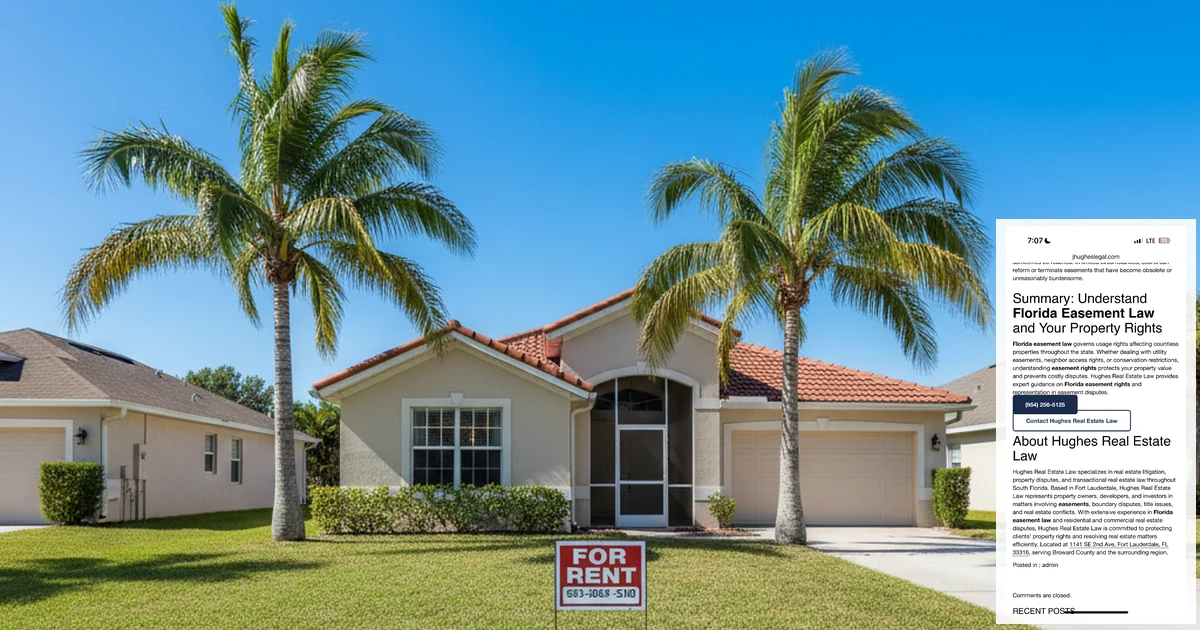
Florida landlord tenant law governs the rights and obligations of both landlords and renters throughout the state — from lease agreements and security deposits to evictions and habitability standards. Whether you are a property owner dealing with a non-paying tenant or a renter facing an unlawful eviction, understanding Florida landlord tenant law is the first step toward protecting yourself. At Hughes Real Estate Law, Fort Lauderdale real estate attorney Joseph Hughes handles landlord-tenant disputes throughout Broward County and South Florida.
The Governing Statute: Florida Chapter 83
Florida landlord tenant law is primarily found in Florida Statutes Chapter 83. Part I covers non-residential tenancies. Part II — the section most people encounter — covers residential landlord-tenant relationships. Chapter 83 sets the rules for:
- Lease requirements and rental agreements
- Security deposit handling and return timelines
- Landlord entry rights and notice requirements
- Tenant duties regarding property maintenance
- Eviction procedures and timelines
- Remedies available to both parties
The full text of Florida Statutes Chapter 83 is publicly available. However, applying the statute to a specific situation — especially in a dispute — typically requires legal guidance.
Lease Agreements Under Florida Landlord Tenant Law
A lease is the foundation of any landlord-tenant relationship. Under Florida landlord tenant law, leases can be written or oral. That said, written leases protect both parties. Key lease provisions governed by Florida law include:
- Lease duration — month-to-month, annual, or fixed-term
- Rent amount and due date — must be clearly stated
- Late fees — permitted but must be disclosed in the lease
- Pet policies — landlords can restrict pets and charge pet deposits
- Subletting — landlords can prohibit subleasing without written consent
A poorly drafted lease is one of the most common sources of landlord-tenant disputes. An experienced real estate attorney in Fort Lauderdale can review or draft a lease that holds up under Florida law.
Security Deposits: Rules Every Landlord and Tenant Must Know
Florida landlord tenant law has specific rules about security deposits that trip up many property owners. Under Chapter 83, landlords must:
- Hold the deposit in a Florida bank account — separate from operating funds
- Provide written notice within 30 days of receiving the deposit — including the bank name and account type
- Return the deposit within 15 days if there are no deductions
- Provide written notice within 30 days if deductions are being made — with an itemized list
Landlords who fail to follow these rules forfeit their right to claim deductions and may owe the tenant the full deposit plus attorney’s fees. This is one of the most litigated areas of Florida landlord tenant law.
Landlord Entry Rights Under Florida Landlord Tenant Law
A landlord cannot enter a rental property whenever they choose. Under Florida landlord tenant law, landlords must provide at least 12 hours’ notice before entering for non-emergency purposes. Entry is permitted for:
- Making requested repairs
- Showing the unit to prospective tenants or buyers
- Inspections when notice is given
Entry without proper notice is a violation of Florida landlord tenant law and can give the tenant grounds to terminate the lease or seek damages. Emergency entry — such as a burst pipe or fire — is permitted without advance notice.
Tenant Duties Under Florida Landlord Tenant Law
Tenants also have obligations under Florida landlord tenant law. Chapter 83.52 requires tenants to:
- Pay rent on time as agreed in the lease
- Keep the unit clean and sanitary
- Remove garbage in a proper manner
- Not destroy or damage the property
- Not disturb neighboring tenants
- Comply with all building and housing codes affecting health and safety
Failure to meet these duties gives the landlord grounds to pursue eviction or seek damages through a real estate litigation attorney.
Eviction Process Under Florida Landlord Tenant Law
Florida has a structured eviction process that landlords must follow exactly. Skipping steps — even one — can get the case dismissed and force the landlord to start over. The process under Florida landlord tenant law works as follows:
- Deliver the proper notice — 3-day notice for non-payment, 7-day notice for lease violations, 15-day notice for month-to-month termination
- File the eviction complaint — in the county court where the property is located
- Serve the tenant — via process server or court-approved method
- Attend the hearing — if the tenant contests, a judge decides
- Obtain a writ of possession — the court order authorizing removal
- Sheriff execution — the sheriff supervises the actual removal
Self-help evictions — changing locks, removing belongings, shutting off utilities — are illegal under Florida landlord tenant law and expose the landlord to significant liability. The Florida Bar’s landlord-tenant consumer guide outlines tenant rights during the eviction process.
Habitability Standards: Landlord Duties
Landlords in Florida must maintain rental properties in a habitable condition. Under Florida landlord tenant law, this means:
- Functioning plumbing, heating, and electrical systems
- Waterproofing and weatherproofing of walls and roof
- Working locks and security features
- Freedom from pest infestation
- Compliance with applicable building, housing, and health codes
If a landlord fails to maintain habitability, the tenant can provide written notice and — if repairs are not made within 7 days — withhold rent or terminate the lease under Florida Statutes § 83.56. According to HUD’s Florida renting resource, tenants have federal protections that layer on top of state law in certain housing situations.
When Disputes Require a Florida Landlord Tenant Law Attorney
Some landlord-tenant issues resolve with a conversation. Others escalate into formal disputes that require legal representation. You should consult a Fort Lauderdale real estate attorney when:
- A tenant refuses to vacate after proper notice
- A landlord wrongfully withholds a security deposit
- There are habitability issues that have not been addressed
- A lease has been breached by either party
- A commercial landlord-tenant dispute has emerged
- You are facing an HOA-related rental restriction issue
Many Florida landlord tenant law disputes also involve related real estate issues — HOA conflicts, property disputes in Broward County, or breaches tied to purchase contracts. Having an attorney who understands the full picture makes a significant difference.
FAQ: Florida Landlord Tenant Law
| Question | Answer |
|---|---|
| How much notice must a landlord give before entering in Florida? | At least 12 hours, except in emergencies. Entry without proper notice violates Florida landlord tenant law. |
| How long does a landlord have to return a security deposit in Florida? | 15 days if no deductions are claimed. 30 days if deductions are being made, with written itemized notice. |
| What is the eviction notice period for non-payment of rent in Florida? | A 3-day notice (excluding weekends and holidays) must be delivered before filing an eviction complaint. |
| Can a landlord shut off utilities to force a tenant out? | No. Self-help evictions, including shutting off utilities, are illegal under Florida landlord tenant law. |
| What are a tenant’s repair and deduct rights in Florida? | If a landlord fails to fix a habitability issue within 7 days of written notice, tenants may withhold rent or terminate the lease. |
| Does Florida landlord tenant law cover commercial properties? | Yes — Chapter 83 Part I covers non-residential tenancies, though the rules differ significantly from residential law. |
Protect Your Rights Under Florida Landlord Tenant Law
Florida landlord tenant law protects both sides — but only when you know how to use it. Whether you are a property owner trying to remove a problem tenant or a renter facing an unlawful eviction, the rules must be followed precisely. Hughes Real Estate Law handles landlord-tenant disputes throughout Fort Lauderdale, Broward County, and South Florida. Call (954) 256-5125 or visit the contact page to speak with a Florida landlord tenant law attorney today.
About Hughes Real Estate Law
Hughes Real Estate Law is a Fort Lauderdale-based real estate law firm focused on property disputes, title issues, landlord-tenant matters, and real estate litigation throughout Broward County and South Florida. Attorney Joseph Hughes brings focused real estate legal experience to every case, helping property owners, landlords, tenants, and investors resolve disputes efficiently and effectively.