




Lien Removal Attorney Fort Lauderdale
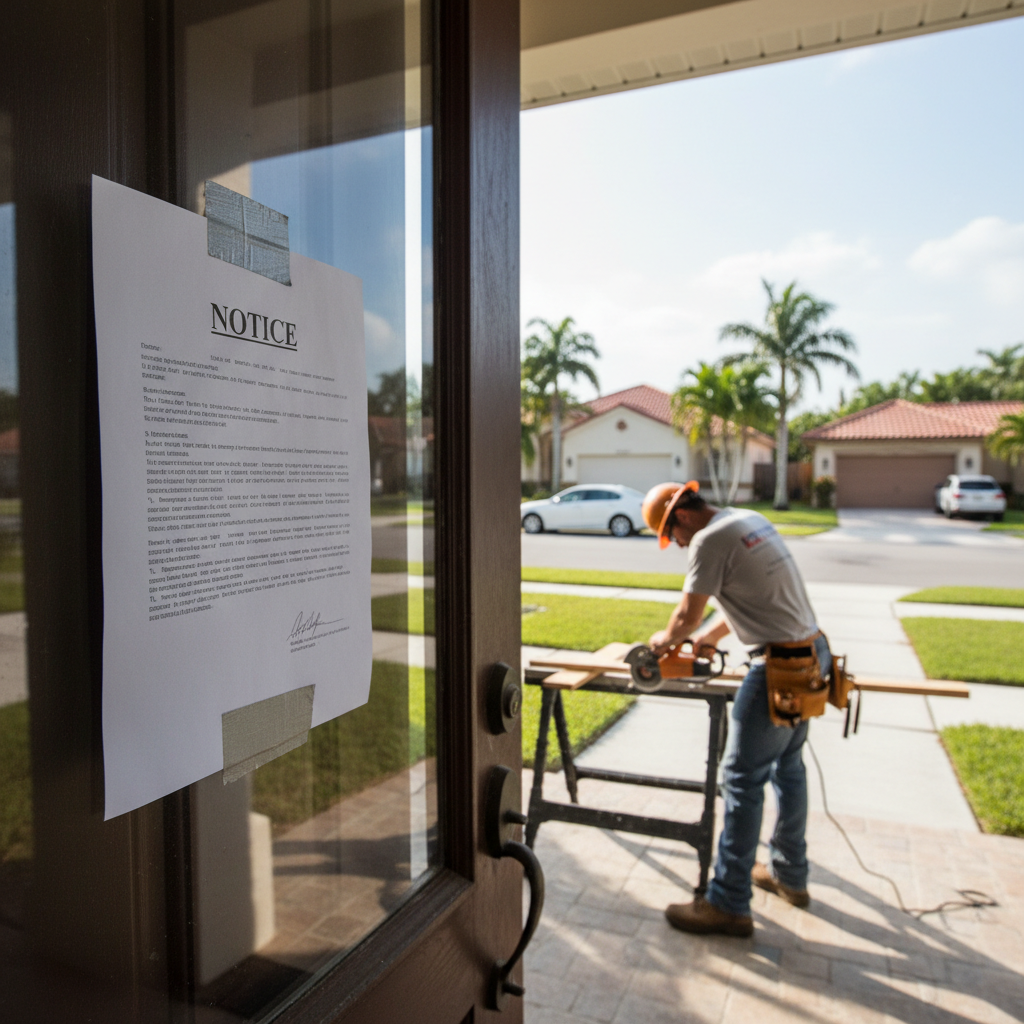
Fort Lauderdale lien removal is one of the most time-sensitive legal services in Broward County real estate. A contractor lien, mechanic’s lien, or judgment lien on your property can block a sale, prevent refinancing, and cloud the title indefinitely if left unresolved. Florida’s Construction Lien Law (Chapter 713) gives contractors, subcontractors, and material suppliers broad rights to place liens on real property for unpaid work — but those same laws impose strict procedural requirements that many lienors fail to follow. When they don’t, a Fort Lauderdale lien removal attorney can challenge the lien and have it discharged faster than most property owners expect.
Joseph Hughes handles lien removal in Fort Lauderdale for property owners, buyers, sellers, and investors throughout Broward County. Hughes Real Estate Law evaluates every lien for procedural defects, negotiates releases, and pursues discharge through litigation when necessary. Joseph Hughes handles every lien removal matter personally.
This page covers the types of liens that affect Florida real estate, how Fort Lauderdale lien removal works under Florida law, and what your options are when a lien is blocking your property transaction or clouding your title.
Types of Liens That Affect Fort Lauderdale Properties
| Lien Type | What It Is | How It’s Removed |
|---|---|---|
| Contractor / Mechanic’s Lien | Filed by a contractor, subcontractor, or supplier for unpaid work or materials under Chapter 713 | Payment, negotiated release, transfer to bond, or discharge for procedural defects |
| Judgment Lien | Arises when a court judgment is recorded against a property owner — attaches to all real property in the county | Payment, satisfaction, or negotiated release — homestead property may be exempt |
| IRS Federal Tax Lien | Filed by the IRS against a taxpayer’s property for unpaid federal taxes | Payment, installment agreement, or Certificate of Discharge from the IRS |
| Florida State Tax Lien | Filed by the Florida Department of Revenue for unpaid state taxes | Payment or negotiated release with the Department of Revenue |
| HOA / Condo Lien | Filed by a homeowner or condo association for unpaid assessments | Payment or legal challenge if the lien was improperly filed or the assessment was unlawful |
| Lis Pendens | Notice of pending litigation that clouds the title while a lawsuit is ongoing | Discharge by court order or resolution of the underlying lawsuit |
Florida Construction Lien Law: What Every Property Owner Must Know
Florida’s Construction Lien Law (Chapter 713) is one of the most powerful — and most technical — statutes in Florida real estate. It gives anyone who provides labor, materials, or services to improve real property the right to place a lien on that property if they aren’t paid. That includes contractors, subcontractors, sub-subcontractors, laborers, and material suppliers.
The law protects workers and suppliers — but it also creates risk for property owners. A homeowner who pays their general contractor in full can still have a lien placed on their property by a subcontractor or supplier the general contractor never paid. This is why property owners should require a Contractor’s Final Payment Affidavit and Releases of Lien from all parties before releasing final payment.
However, Chapter 713 also imposes strict requirements on lienors. Preliminary notices must be served within specific timeframes. The lien must be recorded within 90 days of the last day work was performed or materials were delivered. The lien must contain accurate information about the property and the amount owed. Any procedural defect can render the lien unenforceable — and a Fort Lauderdale lien removal attorney identifies those defects and moves to discharge the lien.
How Fort Lauderdale Lien Removal Works
The lien removal process in Fort Lauderdale depends on the type of lien and the circumstances. Here are the primary paths:
- Negotiated release — The lienor agrees to release the lien in exchange for full or partial payment. Joseph Hughes negotiates directly with the lienor or their attorney to reach an acceptable settlement.
- Transfer to bond — Under Chapter 713, a property owner can transfer a contractor lien to a cash bond or surety bond. The lien is removed from the property and the lienor’s claim is against the bond — allowing a sale or refinance to proceed while the dispute is resolved separately.
- Order to show cause: an owner can file a complaint asking the circuit court to issue a summons requiring the lienor to show cause within 20 days why the lien should not be enforced or canceled. If the lienor fails to respond or file suit, the court must cancel the lien.
- Notice of Contest of Lien: an owner can record and serve a notice that shortens the lienor’s time to sue from 1 year to 60 days. If the lienor does not sue in time, the lien is extinguished automatically.
- Litigation — When a lien is disputed on the merits or the amount is inflated, Joseph Hughes pursues discharge through real estate litigation in Fort Lauderdale.
Recorded liens, judgments, and lis pendens for Fort Lauderdale properties are found in the Broward County Official Records, maintained by the Broward County Records, Taxes and Treasury Division. Searching the records before purchasing or refinancing a property is essential, and having an attorney review them is even more so. Under Florida Statutes Chapter 713, the full Construction Lien Law sets out exactly what lienors must do — and what property owners can do when they don’t.
Florida Construction Lien Deadlines That Work in Your Favor
Chapter 713 gives lienors strong rights, but it also sets hard deadlines. Missing any one of them can make a lien unenforceable. These are the deadlines a Fort Lauderdale lien removal attorney checks first:
| Step | Deadline | Why It Matters for Owners |
|---|---|---|
| Notice to Owner | 45 days after the lienor first furnishes labor or materials | Required for subcontractors and suppliers not hired directly by the owner. A missing or late notice is one of the most common defenses. |
| Claim of Lien recorded | 90 days after final furnishing | A lien recorded after this deadline is unenforceable. |
| Contractor’s Final Payment Affidavit | At least 5 days before the contractor sues to enforce | Applies to contractors hired directly by the owner. A contractor who does not deliver it within the time allowed to sue can lose the right to enforce the lien. |
| Lien expiration | 1 year after the lien is recorded | If the lienor does not file suit to enforce within 1 year, the lien expires. |
| Notice of Contest of Lien | Shortens the time to sue to 60 days | If the lienor does not sue within 60 days after service, the lien is extinguished automatically. |
| Order to Show Cause | 20 days after service of the summons | If the lienor does not show cause or file suit by the return date, the court must cancel the lien. |
Florida law also treats a fraudulent lien seriously. Under section 713.31, a lien that willfully exaggerates the amount owed, includes work that was never performed, or is filed with gross negligence can be thrown out entirely, and the owner may recover damages, attorney fees and costs, and punitive damages. Filing a fraudulent lien is also a crime.
Code Enforcement Liens and the Fort Lauderdale Lien Amnesty Program
Code enforcement liens are a different problem. When a property owner does not correct a code violation, daily fines can accrue and be recorded as a lien against the property. Over time those fines can grow far larger than the original violation, and they block sales and refinances the same way a contractor lien does.
The City of Fort Lauderdale runs a Lien Amnesty Program that can reduce eligible code enforcement fines and liens. Under the City’s current program terms (October 1, 2026 through September 30, 2027):
- Eligible residential properties can receive a 50% reduction, and eligible non-residential properties a 25% reduction.
- The liened property, and every other City of Fort Lauderdale property with the same owner, must be in full compliance with no open violations.
- Administrative fees, hard costs, demolition costs, utility liens, and recording fees are not reducible.
- The application carries a non-refundable fee, and the reduced amount must be paid within 90 days of approval.
Program terms are set by the City and can change, so confirm the current details directly on the City’s Lien Amnesty Program page before applying. Other Broward cities, including Lauderhill, handle code liens through their own processes. Joseph Hughes helps owners bring properties into compliance, prepare reduction requests, and clear code liens before a closing. Learn more about code compliance representation in Fort Lauderdale.
Lien Removal When Closing Is on the Line
A lien discovered during a Fort Lauderdale real estate closing creates an immediate problem. The title company won’t insure the property. The lender won’t fund. The buyer may have the right to terminate. In these situations, time is everything — and a Fort Lauderdale lien removal attorney who knows the process can often resolve the issue before the closing deadline passes.
Joseph Hughes coordinates directly with the title company, the lienor, and the closing agent to resolve lien issues as quickly as possible. In many cases, a lien can be transferred to bond on the same day — allowing the closing to proceed while the underlying dispute is handled separately. For more on the closing process, see Fort Lauderdale property transactions and real estate closings.
Local Resources for Fort Lauderdale Lien Removal
| Resource | What It Provides | Link |
|---|---|---|
| Broward County Records, Taxes and Treasury | Official Records search for recorded liens, judgments, and lis pendens | broward.org |
| Florida Senate — Chapter 713 | Full text of Florida’s Construction Lien Law | flsenate.gov |
| Florida DBPR — Contractor Licensing | Verify contractor licenses, file complaints against unlicensed contractors | myfloridalicense.com |
| IRS — Certificate of Discharge | Information on obtaining federal tax lien discharge from the IRS | irs.gov |
Frequently Asked Questions
| Question | Answer |
|---|---|
| How long does a contractor have to file a lien in Florida? | 90 days from the last date labor was performed or materials were delivered. A lien filed after this deadline is unenforceable and subject to discharge. |
| Can I sell my home with a lien on it in Florida? | The lien must typically be resolved before or at closing — paid from proceeds, transferred to bond, or discharged. A Fort Lauderdale lien removal attorney determines the fastest path based on your specific lien. |
| What is a transfer to bond in Florida lien law? | A transfer to bond replaces the lien on the property with a cash or surety bond as security for the claim. The lien is removed from the property, allowing a sale or refinance to proceed while the underlying dispute is resolved separately. |
| What if the lien amount is inflated or the work was never completed? | A Fort Lauderdale lien removal attorney challenges the lien through litigation — seeking discharge or reduction based on the actual value of work performed and any procedural defects in the filing. |
| Does homestead protection affect judgment liens? | Yes. Florida’s homestead exemption protects your primary residence from most judgment liens for money debts. However, it does not protect against contractor liens, mortgage liens, or tax liens. Joseph Hughes advises on your specific exposure. |
| How long does a construction lien last in Florida? | Generally 1 year after it is recorded. If the lienor does not file suit to enforce the lien within that year, it expires. An owner can shorten that period to 60 days by serving a Notice of Contest of Lien. |
| Can Fort Lauderdale code enforcement liens be reduced? | Often, yes. The City of Fort Lauderdale’s Lien Amnesty Program can reduce eligible code fines and liens for properties that are fully in compliance. Terms are set by the City and can change, so check the City’s program page for current details. |
Clear the Lien. Close the Deal.
Hughes Real Estate Law handles Fort Lauderdale lien removal for property owners, buyers, sellers, and investors throughout Broward County. Call (954) 256-5125 or visit our contact page to schedule your consultation today.
About Hughes Real Estate Law
Hughes Real Estate Law is a Fort Lauderdale real estate law firm focused exclusively on Florida property law. Joseph Hughes handles lien removal, construction lien disputes, and title clearance throughout Broward County. The firm serves Fort Lauderdale, Hollywood, Pompano Beach, Davie, Coral Springs, Dania Beach, Wilton Manors, Oakland Park, Sunrise, Lauderhill, and Margate. Call (954) 256-5125 to speak with a Fort Lauderdale lien removal attorney directly.
