


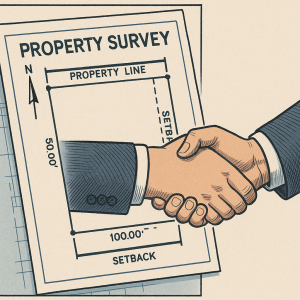
Property line encroachment in Florida happens when a structure, fence, driveway, or landscaping crosses the legal boundary of one property and extends onto a neighbor’s land. It sounds like a minor issue — a few inches of fence, a deck that crept over the line — but under Florida law, the consequences can be significant. An unresolved property line encroachment Florida dispute can cloud your title, reduce your property value, and in some cases permanently transfer your right to that strip of land. Knowing how encroachment works in Florida, what your options are, and when to involve an attorney is what separates a manageable situation from a costly one.
What Is Property Line Encroachment?
Property line encroachment Florida refers to any physical intrusion across a legal property boundary. The encroachment can come from either direction — your neighbor’s structure onto your land, or yours onto theirs. Both carry legal exposure.
Common examples of encroachment disputes in Florida include:
- A fence installed several inches or feet over the property line
- A driveway extension that crosses onto adjacent land
- A storage shed, garage, or addition that was built without verifying the boundary
- Tree roots or overgrown landscaping physically encroaching on neighboring soil
- A pool, retaining wall, or dock that extends past the legal lot line
In most cases, encroachments start as innocent mistakes. A contractor didn’t pull a survey. A fence installer eyeballed the line. Nobody noticed for years. The problem is that time matters a great deal in Florida boundary dispute law — and not always in the way you’d expect.
How Florida Law Treats Encroachment
Florida does not have a single statute governing all property line encroachment Florida situations. Each property line encroachment Florida case turns on its own facts. Disputes are handled through a combination of property law principles, case law, and equitable remedies. The outcome depends heavily on the specific facts — how long the encroachment has existed, whether the affected owner knew about it, and what the encroaching party knew or should have known.
Adverse Possession
Adverse possession Florida is one of the most misunderstood doctrines in real estate law. Under Florida Statute §95.18, a party who openly, continuously, and exclusively occupies someone else’s land for at least seven years — and pays property taxes on it — may be able to claim legal ownership of that strip of land. This is not theoretical. It has cost Florida property owners real land. A property line encroachment Florida situation ignored for seven years can trigger this outcome.
The requirements for adverse possession Florida are strict: the occupation must be hostile (without permission), actual, open and notorious, exclusive, and continuous for the statutory period. The tax-payment requirement was added specifically to make it harder to claim, but the risk remains real for property owners who ignore long-standing encroachments.
Boundary by Acquiescence
Even without a formal adverse possession claim, Florida courts recognize a doctrine called boundary by acquiescence. If two neighbors have treated a particular line as the boundary for a long period — regardless of what the legal survey shows — a court may recognize that agreed-upon line as binding. This is another reason why allowing a neighbor encroachment Florida situation to go unaddressed is risky.

How to Identify a Property Line Encroachment
Most boundary disputes in Florida begin with a survey. Confirming a property line encroachment Florida through a certified plat is the non-negotiable first step. A licensed land surveyor will locate the legal lot corners, measure the boundaries, and produce a certified plat showing exactly where the lines fall. This is the foundation of any encroachment case.
If you’re noticing something that might cross the line — a new fence, a structure going up next door, a driveway that seems to overlap your lot — don’t rely on visual estimates. Order a boundary survey before taking any action. Here’s why: if you confront your neighbor based on what turns out to be an inaccurate assumption, you’ve weakened your position and potentially created a dispute where none needed to exist.
For a property in Fort Lauderdale or Broward County, a boundary survey typically costs between $400 and $1,200 depending on lot size and complexity. That’s a small investment compared to the legal fees — and the land — you could lose by waiting.
One pattern that comes up frequently in South Florida involves fences installed after a property sale, where the new owner assumed the existing fence line was the legal boundary. It wasn’t. When a survey was finally pulled years later during a refinance, the encroachment had grown from a few inches into a documented strip that a neighbor was already citing as their own. The earlier the issue is caught, the cheaper and faster it resolves.
External resources like the Florida Surveying and Mapping Society can help you locate a licensed surveyor in your county, and the Florida Department of Business and Professional Regulation maintains a public directory of licensed surveyors whose credentials you can verify before hiring.
Your Legal Options When Encroachment Occurs
Once a survey confirms a property line encroachment Florida situation, you have several legal paths depending on your goals and the specifics of the dispute.
Negotiated Agreement
The most cost-effective resolution is a written agreement between the parties. This can take two forms: a license agreement (temporary permission that preserves your ownership rights) or a sale of the encroached strip (the neighbor pays for the land they’ve crossed onto). Either option, when drafted and recorded properly, resolves the encroachment dispute cleanly and keeps it off a court docket.
Encroachment Lawsuit
If negotiation fails, an encroachment lawsuit in Florida circuit court can seek injunctive relief — a court order requiring removal of the encroachment — as well as damages for any harm caused. Courts consider factors including the cost of removal, the benefit to the encroaching party, and whether granting an injunction would cause disproportionate hardship.
In some cases, courts award monetary damages instead of ordering removal, particularly when the cost of moving a structure is extreme relative to the encroachment size. This is not the outcome most property owners want when they’ve lost land, which is why acting early — before a structure becomes permanent — makes a significant difference.
Quiet Title Action
When an encroachment has gone on long enough to raise a title question, or when adverse possession is being claimed, a quiet title action in Florida may be necessary. This is a court proceeding that definitively establishes who owns the disputed strip. It resolves the title cloud and produces a judgment that can be recorded and relied on for future sales or financing.
For a deeper look at how Florida easement law intersects with boundary disputes — particularly when an encroachment has existed long enough to create informal access rights — understanding that distinction is important before deciding which legal remedy fits your situation.
What to Do Immediately If You Discover an Encroachment
The steps you take in the first days after discovering a property line encroachment Florida situation matter. Here’s the right order:
- Get a survey — confirm the encroachment exists and document its exact scope
- Document everything — photographs, dates, any communications with the neighbor
- Do not give permission — any oral or written permission you grant can eliminate your legal options
- Do not remove the encroachment yourself — self-help remedies in Florida can expose you to liability
- Consult an attorney — before making contact with the neighbor, understand your position
The order matters. Property owners who skip the survey and go straight to a confrontation often make the dispute worse. Property owners who grant informal permission to “work it out” can inadvertently license the encroachment and lose leverage permanently.
If you’re dealing with a commercial property or a dispute that involves an HOA, the boundary dispute Florida process has additional layers — HOA disputes in Fort Lauderdale frequently involve fence placement and shared boundary interpretations that require their own legal analysis separate from a standard neighbor-to-neighbor encroachment.

Defenses to an Encroachment Claim
If your structure has crossed your neighbor’s line — even accidentally — you’re not without options. Florida courts recognize several defenses in encroachment dispute cases:
| Defense | What It Means |
|---|---|
| Agreed Boundary | Both parties previously established a different line and acted on it for years |
| Survey Error | The claimed encroachment is based on an inaccurate or outdated survey |
| Easement by Prescription | Long-standing use may have created a prescriptive easement over the strip |
| Laches | The complaining party waited too long to bring the claim, causing unfair prejudice |
| Estoppel | The complaining party’s prior conduct led you to reasonably rely on the boundary |
Each of these defenses requires specific factual support in a property line encroachment Florida proceeding. Whether they apply in your case depends on documentation, timing, and how both parties have behaved over time. A real estate attorney in Fort Lauderdale who handles boundary dispute Florida cases can evaluate which defenses are viable before you respond to any legal action.
Property Line Encroachment and Title Insurance
One area that surprises many Florida property owners: title insurance does not automatically protect against encroachments that would have been revealed by a current survey. Standard title insurance policies typically exclude survey matters. An enhanced ALTA owner’s policy with survey coverage is required for encroachment protection — and even then, coverage depends on policy specifics and when the encroachment occurred.
This matters for buyers. If you’re purchasing a property in Broward or Miami-Dade County and there’s any indication of boundary irregularities, ordering a new survey before closing is not optional — it’s essential. Title disputes in Florida that stem from undetected encroachments at closing are far more expensive to resolve than those caught before the deed transfers.
For guidance on how the Florida Realtors Association’s property law resources address survey requirements in residential transactions, reviewing the standard purchase contract addenda can help you understand what protections are and aren’t built in.
How Long Do You Have to Act?
Florida’s statute of limitations for trespass and encroachment claims is generally four years under §95.11(3)(f). However, the adverse possession clock runs on a separate seven-year timeline. These deadlines interact in ways that are not always intuitive. A claim that’s too late for a trespass suit may still be alive — or already lost — under adverse possession doctrine.
The practical answer: if you discover a neighbor encroachment Florida situation, you should not wait. Every year that passes strengthens the encroaching party’s position and weakens yours. With property line encroachment Florida disputes, time is never neutral. The cost of a consultation with a property boundary dispute attorney is minimal compared to what delay can cost you in land and legal fees.
Frequently Asked Questions About Property Line Encroachment in Florida
| Question | Answer |
|---|---|
| What is property line encroachment in Florida? | It’s when a structure, fence, or improvement physically crosses the legal boundary onto a neighboring property. |
| Can I remove a neighbor’s encroachment myself? | No. Self-help removal in Florida can expose you to liability. The correct path is legal action or negotiation. |
| How long does adverse possession take in Florida? | Seven years of continuous, open, exclusive, hostile occupation — plus payment of property taxes — is required under Florida Statute §95.18. |
| Do I need a survey before taking action? | Yes. A certified boundary survey is the foundation of any encroachment claim or defense. Don’t rely on visual estimates. |
| What remedies are available for encroachment? | Injunctive relief (court-ordered removal), monetary damages, quiet title action, or a negotiated written agreement. |
| How much does it cost to resolve an encroachment dispute? | Negotiated resolutions can cost as little as attorney drafting fees. Litigation can run $10,000–$50,000+ depending on complexity. |
Local Resources for Broward County Property Owners
| Resource | Description |
|---|---|
| Broward County Records, Taxes & Treasury | Access recorded plats, property ownership records, and historical deed documents for Broward County properties. |
| Florida DBPR — Licensed Surveyors | Verify and locate licensed land surveyors in Florida before hiring for a boundary survey. |
| Broward County Circuit Court | Circuit court handling real estate litigation, quiet title actions, and encroachment lawsuits in Broward County. |
Protect Your Property Lines Before the Problem Gets Bigger
Property line encroachment in Florida rarely resolves itself. The longer it sits, the more legal weight the encroaching party accumulates — and the fewer clean options you have. Whether you’ve just discovered a fence over the line or you’re dealing with a structure that’s been there for years, the right time to act is now. Every unresolved property line encroachment Florida case grows more costly with delay. Hughes Real Estate Law handles property line encroachment Florida disputes throughout Fort Lauderdale and Broward County — from survey-based negotiations to quiet title litigation. Call (954) 256-5125 or visit our contact page to discuss your situation.
About Hughes Real Estate Law
Hughes Real Estate Law is a Fort Lauderdale-based real estate law firm serving property owners, buyers, sellers, and investors throughout Broward and Miami-Dade Counties. The firm handles boundary disputes, quiet title actions, title litigation, landlord-tenant matters, and a full range of real estate transactional and litigation needs. Located at 1141 SE 2nd Ave, Fort Lauderdale, FL 33316, the firm is available by appointment at its Hollywood, FL office as well.


