




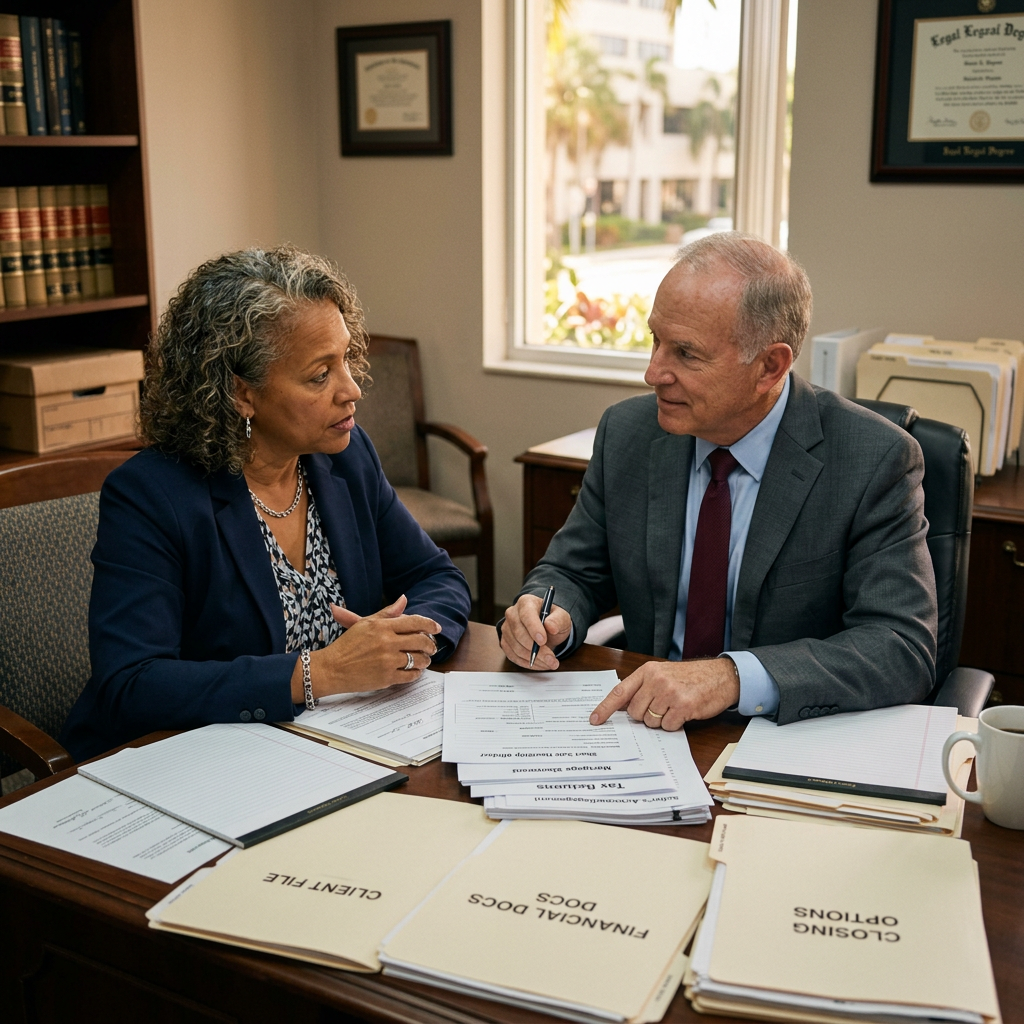
A short sale attorney in Fort Lauderdale helps homeowners who owe more on their mortgage than their property is worth navigate one of the most legally and financially complex alternatives to foreclosure. A short sale is not simply a discounted listing — it is a negotiated transaction in which the lender agrees to accept less than the full amount owed as full satisfaction of the loan. Getting a lender to agree requires documentation, negotiation, legal analysis of deficiency exposure, and coordination of a closing that satisfies the lender’s specific requirements. A Fort Lauderdale short sale attorney manages every step — protecting you from the legal and financial risks that make short sales dangerous to navigate without legal representation.
Joseph Hughes handles short sales throughout Fort Lauderdale and Broward County for homeowners, investors, and lenders. Hughes Real Estate Law reviews your specific loan situation, advises on deficiency liability, negotiates with lenders and servicers, coordinates the closing, and ensures the short sale approval letter contains the deficiency waiver language you need. Joseph Hughes handles every short sale matter personally.
This page covers how a Florida short sale works, what deficiency liability is and why it matters, how the lender approval process works, and why a Fort Lauderdale short sale attorney is essential to protecting your financial future after the sale closes.
What Is a Short Sale in Florida?
A Florida short sale occurs when a homeowner sells their property for less than the outstanding mortgage balance — and the lender agrees in writing to accept the sale proceeds as full or partial satisfaction of the debt. Unlike a foreclosure, a short sale is a voluntary transaction that requires the homeowner’s active participation, lender approval, and a successful closing. The primary benefit over foreclosure is control — a short sale lets you choose the buyer, manage the timeline, and — most critically — negotiate the terms of the lender’s deficiency position before the sale closes.
Florida is a deficiency judgment state — meaning a lender can sue a homeowner for the difference between the mortgage balance and the sale proceeds after a foreclosure. A properly negotiated short sale approval letter that includes a full deficiency waiver eliminates that risk entirely. A Fort Lauderdale short sale attorney ensures your approval letter contains that waiver. The Florida deficiency judgment statute §702.06 governs lender deficiency rights after property sales.
The Short Sale Process in Florida
- Hardship documentation — The lender requires proof of financial hardship. Your attorney advises on what documentation is required and how to present it effectively
- Listing and offer — The property is listed at current market value. When an offer is received, it is submitted to the lender with supporting documentation
- Lender review and negotiation — The lender reviews the file, orders its own BPO or appraisal, and issues an approval, counter-offer, or denial. Your attorney negotiates the terms including the deficiency position
- Short sale approval letter review — Your attorney reviews the lender’s approval letter carefully — confirming the deficiency waiver language, the approval expiration date, and any conditions that must be met before closing
- Closing — The transaction closes, proceeds are disbursed to the lender, and the mortgage is satisfied according to the approval letter terms
For related foreclosure matters, see foreclosure defense attorney Fort Lauderdale. For related transaction services, see Fort Lauderdale property transactions and closings. The Consumer Financial Protection Bureau provides consumer resources on mortgage options and short sale rights.
Deficiency Liability: The Risk Short Sale Sellers Must Address
The deficiency — the difference between the mortgage balance and the short sale proceeds — is the central legal risk in any Florida short sale. If the lender does not waive the deficiency in the approval letter, they retain the right to sue the homeowner for that amount after closing. On a $400,000 mortgage with $280,000 in short sale proceeds, that deficiency is $120,000 — a debt that follows the homeowner after they’ve already lost the property.
A Fort Lauderdale short sale attorney negotiates the deficiency waiver as the primary condition of any short sale approval — and reviews the approval letter language with precision before allowing the closing to proceed. The distinction between a waiver and a conditional release can mean the difference between financial freedom and a six-figure lawsuit. The American Land Title Association provides additional resources on property sale transactions.
Local Resources for Fort Lauderdale Short Sale Sellers
| Resource | What It Provides | Link |
|---|---|---|
| Consumer Financial Protection Bureau | Mortgage relief options, short sale rights, lender obligation resources | consumerfinance.gov |
| Broward County Property Appraiser | Current property value estimates, ownership records | bcpa.net |
| Broward County Clerk of Courts | Mortgage records, lis pendens filings, foreclosure case search | browardclerk.org |
| Florida Senate — §702.06 | Florida’s deficiency judgment statute | flsenate.gov |
Frequently Asked Questions
| Question | Answer |
|---|---|
| Does a short sale hurt my credit less than a foreclosure? | Generally yes — a short sale typically has a less severe and shorter-lasting credit impact than a foreclosure. |
| Do I need to be behind on my mortgage to do a short sale? | Not always. Some lenders will consider a short sale for homeowners who are current but facing imminent hardship. Your attorney evaluates your specific loan and lender to determine eligibility. |
| How long does a Florida short sale take? | Typically 3 to 6 months from listing to closing — depending on the lender’s review timeline. Starting the process earlier gives you more time and leverage. |
| What is a deficiency waiver and why do I need one? | A deficiency waiver is language in the lender’s approval letter stating the lender will not pursue the homeowner for the remaining balance after closing. Without it, the lender retains the right to sue. A short sale attorney negotiates and confirms this language before closing. |
| Does Joseph Hughes handle short sales in Hollywood and Broward County? | Yes. Hughes Real Estate Law handles short sales for homeowners throughout Fort Lauderdale, Hollywood, and all of Broward County. |
Get Out From Under — With Legal Protection
Hughes Real Estate Law handles short sales in Fort Lauderdale for homeowners and investors throughout Broward County. Call (954) 256-5125 or visit our contact page to schedule your consultation today.
About Hughes Real Estate Law
Hughes Real Estate Law is a Fort Lauderdale real estate law firm focused exclusively on Florida property law. Joseph Hughes handles short sales, deficiency negotiations, and foreclosure-related matters for homeowners and investors throughout Broward County. The firm serves Fort Lauderdale, Hollywood, Pompano Beach, Davie, Coral Springs, Dania Beach, Wilton Manors, Oakland Park, Sunrise, and Margate. Call (954) 256-5125 to speak with a Fort Lauderdale short sale attorney directly.