




Real Estate Closing Attorney in Fort Lauderdale
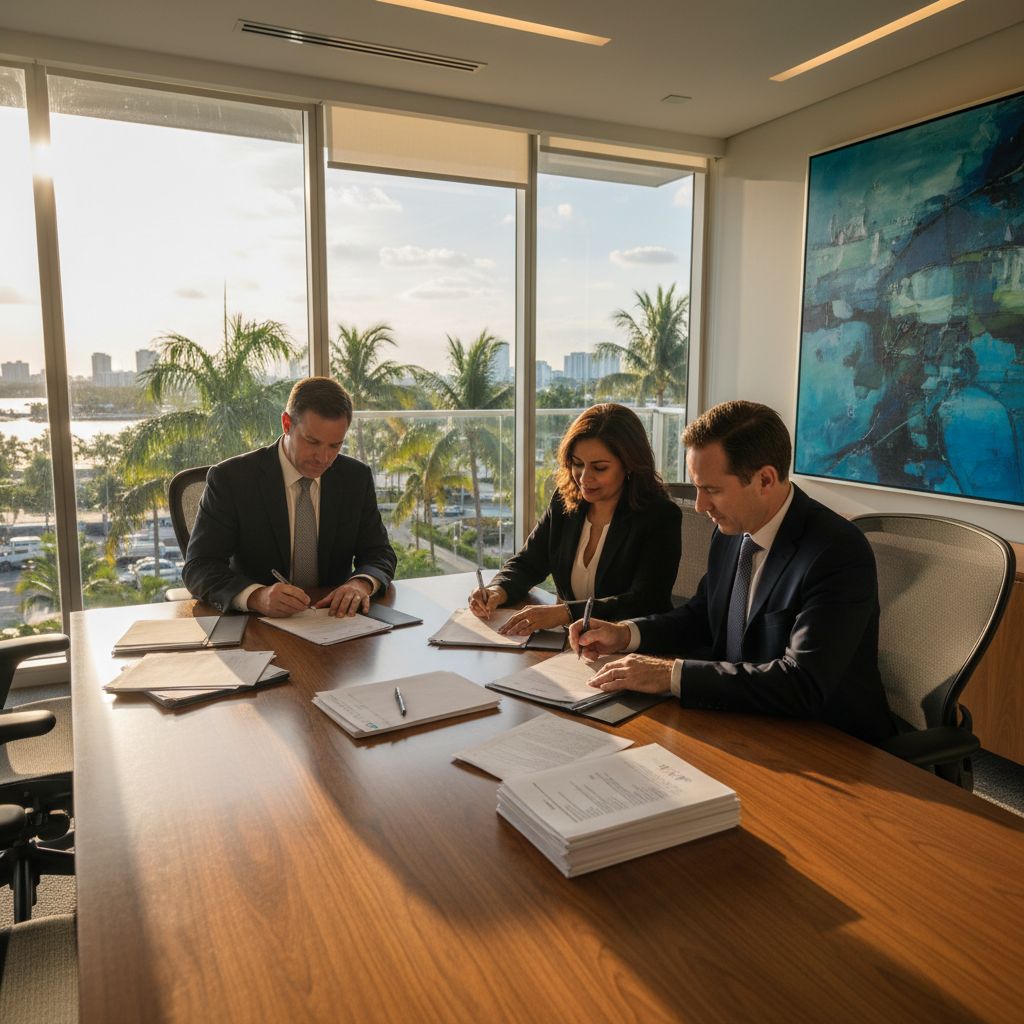
Fort Lauderdale property transactions and real estate closings involve more legal detail than most buyers and sellers expect. Every closing in Florida requires a title search, a closing disclosure review, deed preparation, lien clearance, and the proper execution of transfer documents. A single error — a missed lien, an incorrect legal description, an improperly signed deed — can cloud the title and create expensive problems after closing. Having a Fort Lauderdale real estate closing attorney at the table is the most direct way to make sure the deal closes cleanly and your ownership is legally protected.
Joseph Hughes handles Fort Lauderdale property transactions and real estate closings for buyers, sellers, investors, and lenders throughout Broward County. Hughes Real Estate Law coordinates directly with title companies, lenders, and real estate agents to ensure every legal requirement is met before and at the closing table. Joseph Hughes reviews every document personally — nothing gets signed without legal clearance.
This page explains what happens at a Florida real estate closing, what a Fort Lauderdale real estate closing attorney does at each stage, and why having legal representation at closing protects your investment in ways that real estate agents and title companies legally cannot.
What Happens at a Florida Real Estate Closing
A real estate closing in Florida is the final step in a property transaction. It is the point at which ownership legally transfers from seller to buyer and all financial obligations are settled. Here is what takes place at every Florida closing:
- Title search review — A full search of the property’s ownership history confirms the seller has clear title and reveals any liens, encumbrances, or competing claims
- Title insurance issuance — Owner’s and lender’s title insurance policies are issued to protect against future ownership challenges
- Closing disclosure review — The ALTA settlement statement or closing disclosure outlines all costs, credits, and disbursements. Your attorney verifies these match the contract terms
- Deed preparation and execution — The deed transferring ownership is prepared, reviewed, and properly executed. In Florida, a deed must be signed in the presence of two witnesses and acknowledged before a notary to be recorded
- Lien clearance — All outstanding liens — contractor liens, tax liens, HOA liens — must be satisfied or discharged before the deed can be recorded
- Funds disbursement — Purchase funds are distributed to the seller, lender payoffs are made, and closing costs are allocated per the settlement statement
- Recording — The new deed and mortgage are recorded in Broward County public records, completing the transfer of ownership
What a Fort Lauderdale Real Estate Closing Attorney Does
A title agent processes the paperwork. A Fort Lauderdale real estate closing attorney protects your legal rights. The distinction matters because title agents are not licensed to give legal advice, identify legal risks in contract terms, or represent you if a dispute arises at or after the closing table.
| Stage | What Your Attorney Does |
|---|---|
| Pre-closing review | Reviews the title commitment, identifies defects, confirms all contract conditions are met |
| Closing disclosure review | Verifies every line on the settlement statement matches the contract — catches overcharges, missing credits, and errors |
| Deed and document review | Confirms the deed is correctly drafted, the legal description is accurate, and all signatures are properly notarized |
| Lien verification | Confirms all liens have been satisfied or escrowed for payoff — nothing transfers to you post-closing |
| Dispute resolution at closing | If a problem surfaces at the closing table, your attorney can advise you and negotiate a fix before you sign. A title agent cannot give legal advice. |
| Post-closing issues | If a problem emerges after closing — undisclosed defect, recording error, lien that wasn’t cleared — your attorney handles it |
Closing Representation for Buyers and Sellers
Buyers and sellers both benefit from a closing attorney, for different reasons. Buyers need someone to confirm the title is clean, the settlement statement matches the contract, and they are not signing documents that create obligations the contract never required. Sellers need someone to confirm payoff figures, make sure the deed is properly drafted and executed, and avoid accepting credits, repairs, or liability they do not owe.
Joseph Hughes represents buyers and sellers at closing and can handle the full transaction from contract through closing when retained early. For contract-stage help, see real estate contract review in Fort Lauderdale. Sellers can also learn more about seller representation, and if a deal is at risk, see why real estate deals fall apart at closing.
Common Issues Found at Fort Lauderdale Closings
Experienced attorneys know what to look for because they have seen what goes wrong. Here are the most common issues that surface during Fort Lauderdale real estate closings:
- Unresolved contractor liens — A contractor who worked on the property may have filed a lien that was never paid off. Under Florida’s Construction Lien Law (Chapter 713), these liens transfer with the property if not cleared.
- HOA estoppel certificate errors — The estoppel certificate from the HOA must accurately reflect all fees, assessments, and violations. Errors leave buyers liable for the seller’s HOA debt.
- Survey discrepancies — A new survey may reveal encroachments, easement issues, or boundary discrepancies that don’t match the legal description in the deed.
- Closing cost errors — Last-minute changes to the settlement statement that don’t match the contract — higher lender fees, missing seller credits, incorrect prorations.
- Deed defects — Improperly executed deeds, incorrect legal descriptions, or missing spousal signatures on homestead property can void the transfer entirely.
- Outstanding judgments — Judgments against the seller can attach to real property in Florida. A thorough title search identifies these — but not all searches are equally thorough.
Title problems are common enough that every closing should include a careful review of the title commitment. A Fort Lauderdale real estate closing attorney identifies and resolves these issues before they become your problem as the new owner.
Title Insurance in Fort Lauderdale
Title insurance protects buyers and lenders against future claims arising from title defects that existed before closing. Florida has two types: the owner’s policy, which protects the buyer, and the lender’s policy, which protects the mortgage lender. Who pays for the owner’s policy depends on the contract and on local custom, which varies by county in Florida. In some South Florida counties the buyer customarily pays for the owner’s policy and chooses the title agent, while in much of the rest of the state the seller customarily pays. Florida title insurance premiums are set by state rule, so the premium itself is the same no matter which title agent you use.
Joseph Hughes coordinates title insurance and escrow services in Fort Lauderdale, working directly with the title company to ensure the commitment is accurate, the exceptions are reviewed, and the policy is issued correctly. Florida Statutes Chapter 689 governs real property conveyances and sets the legal requirements for valid deed transfers in Florida.
Residential vs. Commercial Closings in Broward County
Commercial real estate closings in Fort Lauderdale involve additional layers of legal review beyond residential transactions. Due diligence periods are longer. Environmental assessments may be required. Lease obligations transfer with the property. Zoning compliance must be verified. Existing tenant rights must be addressed. Lender requirements for commercial loans are substantially more demanding.
A Fort Lauderdale real estate closing attorney handles both residential and commercial closings — reviewing all due diligence materials, negotiating seller representations and warranties, and ensuring the commercial deed and assignment documents are properly executed. If you are purchasing an investment property, retail space, office building, or commercial lot in Broward County, Hughes Real Estate Law provides full closing representation.
Local Resources for Fort Lauderdale Property Transactions
| Resource | What It Provides | Link |
|---|---|---|
| Broward County Property Appraiser | Property records, ownership history, homestead exemptions | bcpa.net |
| Broward County Records, Taxes and Treasury | Official Records search for recorded deeds, mortgages, and liens | broward.org |
| Florida Department of Revenue | Documentary stamp tax rates and real estate transfer taxes | floridarevenue.com |
| American Land Title Association | Consumer resources on title insurance and closing protections | alta.org |
Frequently Asked Questions
| Question | Answer |
|---|---|
| Does Florida require an attorney at closing? | No. Florida does not legally require an attorney at closing. But only an attorney can identify legal risks, advise you on your rights, and litigate if something goes wrong after the closing. |
| Who pays closing costs in Florida? | Closing costs in Florida are negotiable between buyer and seller. Sellers typically pay real estate commissions, and who pays the owner’s title insurance depends on the contract and local custom. Buyers pay lender fees and recording costs. Your contract determines the split. |
| What is documentary stamp tax in Florida? | Florida charges a documentary stamp tax on deeds and mortgages. For deeds, the rate is $0.70 per $100 of the purchase price (in most counties). Mortgages are taxed at $0.35 per $100. This is paid at closing. |
| What happens if a lien is found at closing? | Your attorney works to clear the lien before closing — either through payoff, negotiated release, or transfer to bond. If it can’t be cleared in time, your attorney advises on your contract rights, including the right to extend or walk away. |
| Can I close on a property without a title search? | Technically yes, but it is legally reckless. Any undiscovered lien, judgment, or title defect becomes your problem the moment the deed is recorded. A real estate closing attorney in Fort Lauderdale ensures the title is clean before you close. |
Close with Confidence in Fort Lauderdale
Hughes Real Estate Law handles Fort Lauderdale property transactions and real estate closings for buyers, sellers, investors, and lenders throughout Broward County. Call (954) 256-5125 or visit our contact page to schedule your closing consultation today.
About Hughes Real Estate Law
Hughes Real Estate Law is a Fort Lauderdale real estate law firm focused exclusively on Florida property law. Joseph Hughes represents buyers, sellers, investors, and lenders in property transactions and closings throughout Broward County. The firm serves Fort Lauderdale, Hollywood, Pompano Beach, Davie, Coral Springs, Dania Beach, Wilton Manors, Oakland Park, Sunrise, and Margate. To speak with a Fort Lauderdale real estate closing attorney directly, call (954) 256-5125.
