




How Post-Occupancy Agreements Work in Florida Real Estate
A post-occupancy agreement Florida allows a seller to remain in their home after the closing date while the buyer takes legal ownership. This temporary arrangement is common in Fort Lauderdale and Broward County when sellers need extra time to move. Understanding the terms of a post-occupancy agreement protects both buyers and sellers from disputes over property condition, payment, and move-out deadlines.
What is a Post-Occupancy Agreement?
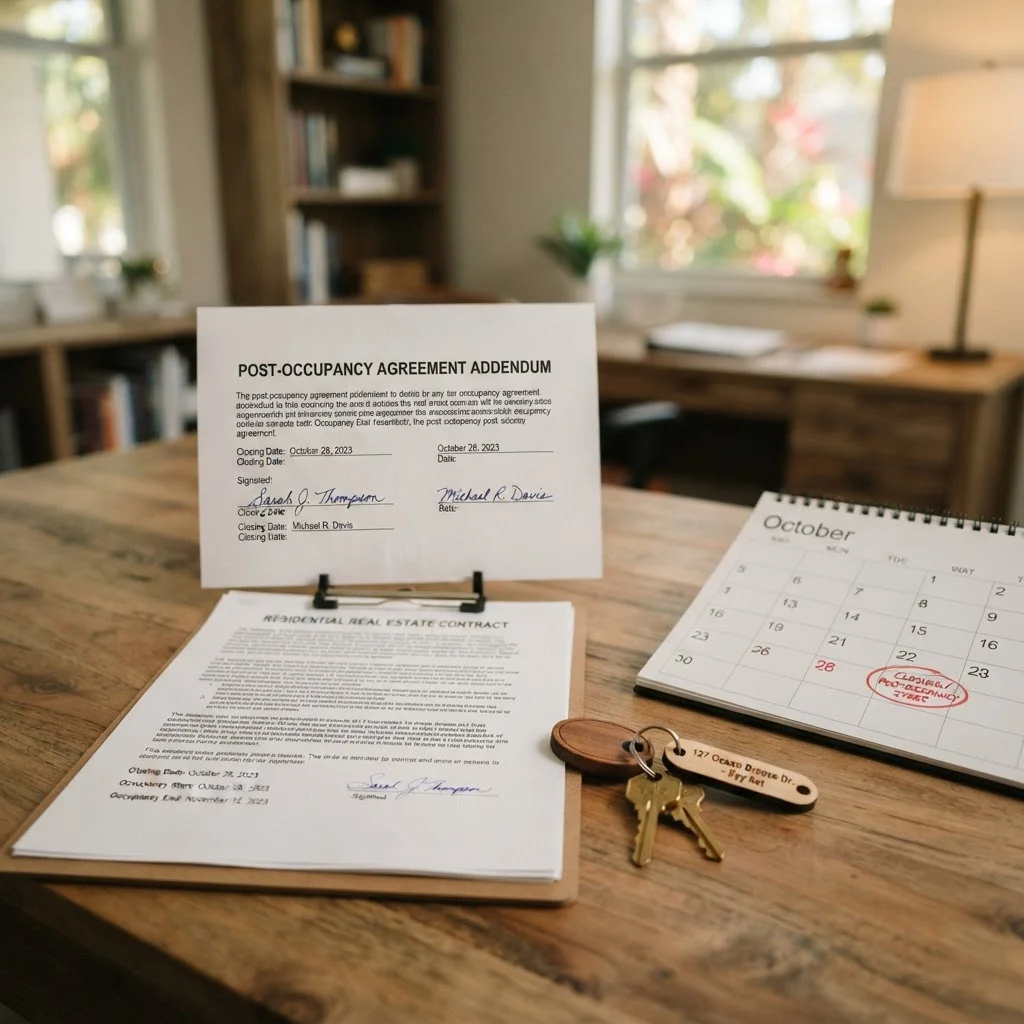
A post-occupancy agreement is a contract between a buyer and seller that permits the seller to stay in the property after closing. The buyer becomes the legal owner, but the seller retains physical possession for an agreed period. This arrangement is sometimes called a rent-back agreement. Common reasons include the seller waiting for their new home to be ready, unexpected delays in relocation, or scheduling conflicts with movers. A real estate contract review attorney should review the agreement before signing.
Key Terms Every Agreement Must Include
A well-drafted post-occupancy agreement Florida should contain these essential terms:
- Duration: Specific start and end dates for the occupancy period
- Occupancy fee: Daily or monthly payment from seller to buyer for use of the property
- Utilities: Which party pays for electricity, water, gas, and internet during occupancy
- Maintenance: Responsibility for repairs, lawn care, and upkeep during the occupancy
- Insurance: Confirmation that both parties have adequate coverage
- Security deposit: Amount held to cover potential damages or unpaid fees
- Exit conditions: Inspection requirements and property condition at vacate
Florida landlord-tenant law, specifically Florida Statutes Chapter 83, provides the legal framework for these agreements.
Common Disputes and How to Avoid Them
While post-occupancy agreements are practical, they can lead to disputes if not properly structured. Common issues include:
- Failure to vacate: The seller refuses or is unable to leave by the agreed date
- Property damage: The seller damages the home during the occupancy period
- Utility disputes: Unpaid bills create confusion over responsibility
- Condition disagreements: The buyer claims the property was left in worse condition than agreed
One Fort Lauderdale buyer allowed a seller to stay for two weeks after closing without a written agreement. The seller stayed for three months, stopped paying utilities, and left $4,000 in damage. Without a written post-occupancy agreement Florida contract, the buyer had to pursue real estate litigation to recover costs. Cases like this show why every post-closing occupancy needs a written, enforceable agreement.
What Happens If the Seller Refuses to Leave?
If a seller refuses to vacate after the post-occupancy agreement expires, the buyer has legal remedies. Florida law treats the holdover seller as a tenant at sufferance. The buyer can file an eviction action to remove the seller from the property. The agreement should include specific penalties for each day the seller remains beyond the expiration date. A Florida landlord-tenant law attorney can guide you through the eviction process. Acting quickly is important because delay can blur the legal boundaries between guest and tenant.
Post-Occupancy vs Pre-Occupancy Agreements
Buyers and sellers should also understand the difference between post-occupancy and pre-occupancy agreements. A post-occupancy agreement allows the seller to stay after closing. A pre-occupancy agreement allows the buyer to move in before closing. Both types of post-occupancy agreement Florida arrangements carry risks and require written contracts. In a pre-occupancy scenario, the buyer takes possession before legally owning the property, which creates liability questions if damage occurs. If you are considering either arrangement, a real estate transaction dispute attorney can draft terms that protect your interests.
Insurance Considerations During Post-Occupancy
Insurance coverage during a post-occupancy agreement period requires careful attention. The buyer’s new homeowner’s insurance policy typically takes effect at closing, but it may not cover a seller still living in the property. The seller should maintain their existing policy until they vacate to ensure continuous coverage. Both parties should confirm with their insurance providers that their policies account for the post-closing occupancy arrangement. Gaps in coverage can create serious liability issues if a fire, theft, or injury occurs during the transition period. An experienced real estate closing attorney can help verify that insurance provisions in the agreement are properly structured.
Frequently Asked Questions
| Question | Answer |
|---|---|
| What is the typical duration for a post-occupancy agreement? | Most agreements range from a few days to a few weeks, depending on the seller’s needs and the buyer’s flexibility. |
| Is an occupancy fee required? | Not mandatory, but customary. The fee compensates the buyer for allowing the seller to stay after closing. |
| What happens if the seller fails to vacate on time? | The agreement should specify daily penalties. The buyer can file an eviction action to remove the holdover seller. |
| Who is responsible for damage during the post-occupancy period? | The seller is typically liable for damages incurred during their occupancy, secured by the deposit. |
| Do I need a written agreement if the seller only stays a few days? | Yes, always. Even short-term occupancy should be documented to protect both parties legally. |
Local Resources in Fort Lauderdale and Broward County
| Resource | Website |
|---|---|
| Broward County Property Appraiser | bcpa.net |
| Broward County Clerk of Courts | browardclerk.org |
| Broward County Bar Association | browardbar.org |
Get Legal Help With Post-Occupancy Agreements in Fort Lauderdale
If you need a post-occupancy agreement Florida drafted or are dealing with a dispute, Hughes Real Estate Law can help. Contact us at (954) 256-5125 or visit our office at 1141 SE 2nd Ave, Fort Lauderdale, FL 33316.
