


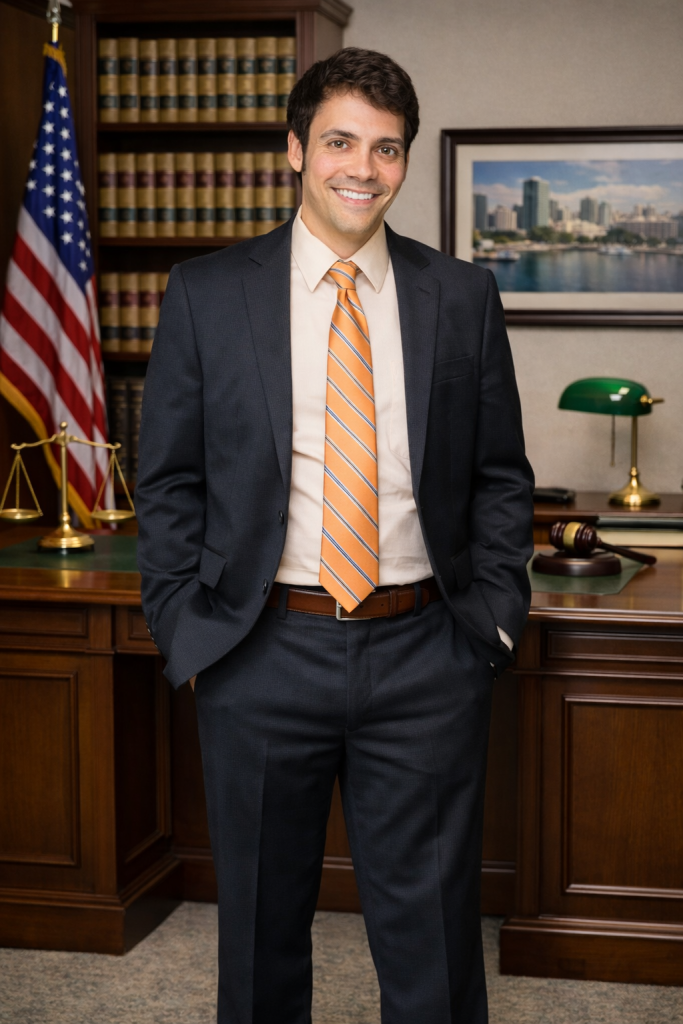
Fort Lauderdale Real Estate Legal Services
Hughes Real Estate Law is a full-service Fort Lauderdale real estate law firm representing buyers, sellers, investors, landlords, tenants, developers, and property owners throughout Broward County. Every practice area below is handled personally by Joseph Hughes.
| Practice Area | What We Handle |
|---|---|
| Real Estate Transactions & Closings | Residential and commercial purchases, sales, closings, and contract review throughout Broward County |
| Real Estate Litigation | Breach of contract, fraud, partition actions, quiet title, and property disputes in Broward County Circuit Court |
| Contract Review & Drafting | Purchase agreements, lease agreements, and custom real estate contracts reviewed, revised, and drafted |
| Title Insurance & Title Searches | Title commitments, lien searches, escrow services, and title insurance coordination for all closings |
| Landlord Representation | Lease drafting, evictions, security deposit disputes, and landlord rights throughout Broward County |
| Tenant Representation | Wrongful eviction defense, habitability claims, security deposit recovery, and tenant rights |
| HOA & Condo Association Disputes | Assessment challenges, lien disputes, selective enforcement, and governance conflicts |
| Commercial Real Estate | Commercial acquisitions, commercial leases, and investment property transactions |
| Foreclosure Defense | Standing challenges, loan modification negotiations, and deficiency defense for Broward County homeowners |
| 1031 Exchange | Like-kind exchange structuring, deadline management, and replacement property closings for investors |
Why Property Owners Choose Hughes Real Estate Law
Most law firms route clients through a team of associates and paralegals. At Hughes Real Estate Law, that never happens. Joseph Hughes is the only attorney at this firm — and he handles every client matter personally. That means the attorney you meet at your consultation is the same attorney reviewing your contract, attending your closing, and representing you in court if needed. For buyers, sellers, investors, and property owners in Fort Lauderdale who need a real estate attorney they can actually reach and rely on, that distinction matters.
The firm handles matters throughout Broward County — Fort Lauderdale, Hollywood, Pompano Beach, Davie, Coral Springs, Dania Beach, Wilton Manors, Oakland Park, Sunrise, and Margate. For property owners in Hollywood specifically, see real estate attorney Hollywood FL. For buyers, see buyer representation attorney Fort Lauderdale. For sellers, see seller representation attorney Fort Lauderdale. The Florida Bar confirms that only a licensed attorney can give legal advice in a Florida real estate transaction.
Fort Lauderdale Real Estate Law: What Florida Property Owners Need to Know
Florida property law has specific rules that affect every transaction, dispute, and landlord-tenant relationship in Broward County. Florida is a judicial foreclosure state — lenders must sue in court to foreclose, creating legal defenses that don’t exist in non-judicial states. Florida’s seller disclosure obligations under Johnson v. Davis apply to every residential sale regardless of whether it’s sold as-is. Florida’s Landlord-Tenant Act under Chapter 83 sets precise notice and procedure requirements that both landlords and tenants must follow exactly. And Florida’s condominium law under Chapter 718 gives unit owners specific rights that associations frequently violate.
Understanding these rules — and acting on them correctly — is what a Fort Lauderdale real estate attorney at Hughes Real Estate Law does every day. For property records and ownership history, the Broward County Property Appraiser maintains all Broward County property data. For lien searches and court filings, the Broward County Clerk of Courts is the primary resource.
Serving Fort Lauderdale and All of Broward County
| Resource | What It Provides | Link |
|---|---|---|
| Broward County Property Appraiser | Property ownership records, assessed values, tax history for all Broward County properties | bcpa.net |
| Broward County Clerk of Courts | Deed recordings, lien searches, foreclosure filings, and litigation records | browardclerk.org |
| Florida Bar — Consumer Resources | Consumer guides on Florida real estate law and attorney resources | floridabar.org |
| Florida Senate — Property Statutes | Full text of Florida property law, landlord-tenant, condo, and foreclosure statutes | flsenate.gov |
Frequently Asked Questions
| Question | Answer |
|---|---|
| What types of real estate matters does Joseph Hughes handle? | Joseph Hughes handles the full range of Florida property law — transactions, closings, contract disputes, title issues, landlord-tenant matters, HOA disputes, foreclosure defense, 1031 exchanges, and real estate litigation throughout Broward County. |
| Does Joseph Hughes personally handle every case? | Yes. Hughes Real Estate Law is a solo practice. Joseph Hughes personally handles every client matter — no associates, no delegation. |
| What areas does Hughes Real Estate Law serve? | The firm serves Fort Lauderdale and all of Broward County — including Hollywood, Pompano Beach, Davie, Coral Springs, Dania Beach, Wilton Manors, Oakland Park, Sunrise, and Margate. |
| Do I need a real estate attorney for a residential closing in Florida? | Florida does not legally require an attorney at closing — but only a licensed attorney can advise you on the legal implications of the documents you sign. A Fort Lauderdale real estate attorney ensures your interests are protected at every stage. |
| How do I schedule a consultation with Joseph Hughes? | Call (954) 256-5125 or visit the contact page to schedule your consultation directly with Joseph Hughes. |
Your Fort Lauderdale Real Estate Attorney — Ready When You Are
Hughes Real Estate Law is Fort Lauderdale’s dedicated real estate law firm — handling transactions, litigation, and every property law matter for clients throughout Broward County. Call (954) 256-5125 or visit our contact page to speak with Joseph Hughes directly.
About Hughes Real Estate Law
Hughes Real Estate Law is a Fort Lauderdale real estate law firm focused exclusively on Florida property law. Joseph Hughes handles real estate transactions, closings, litigation, landlord-tenant matters, HOA disputes, foreclosure defense, and 1031 exchange transactions for clients throughout Broward County. The firm serves Fort Lauderdale, Hollywood, Pompano Beach, Davie, Coral Springs, Dania Beach, Wilton Manors, Oakland Park, Sunrise, and Margate. Call (954) 256-5125 to speak with a Fort Lauderdale real estate attorney directly.